


Every great meal starts in the same place: on a cutting board. It's where you dice the onions, trim the steak, and slice the bread, and it's the surface your knife meets thousands of times a year. Choose the right one and both your prep and your blade will thank you.
Most kitchen cutting boards come down to two materials, wood and plastic. Wood is gentler on your knife edge, looks beautiful on the counter, and can last for decades. Plastic is lighter, more affordable, and easy to toss in the dishwasher. Many cooks wonder which one wins, but the best answer is usually both. Food safety experts recommend keeping separate boards for raw meat and for ready-to-eat foods like produce and bread, because it's one of the simplest ways to prevent cross-contamination. Below, we'll walk through the types of cutting boards, what to look for, and how to find the best material for the way you cook.
Overview of Essential Cutting Board Features
A cutting board does two jobs at once. It gives you a stable, clean surface for meal prep, and it protects the edge of your knife every time the blade reaches the bottom of a cut. A hard countertop, a ceramic plate, or a stone surface will roll or chip a sharp edge in just a few strokes. A good cutting board gives a little under the blade, which keeps that edge sharp longer.
Here are the two most common options you'll find:
- Plastic cutting boards are typically made from polyethylene or polypropylene. They're thin, light, and built for quick, everyday tasks.
- Wooden cutting boards are made from hardwoods like walnut, maple, cherry, or acacia. They're heavier, more substantial, and designed to be a long-term part of your kitchen.
Whichever you choose, durability matters. A board that warps, cracks, or gouges easily becomes harder to clean and less pleasant to work on. A solid surface is the foundation for safe prep and for getting the most out of your chef knives.
What Is the Best Cutting Board Material? Plastic vs Wood
When people ask what the best cutting board material is, they're usually weighing plastic against wood. Each one has a clear place in the kitchen.
Plastic Cutting Boards
Plastic boards are made from food-safe polymers, most often high-density polyethylene. Their biggest advantages are practical. They're generally cheaper than wood, they're light enough to move around easily, and most are dishwasher safe, which makes sanitizing them after handling raw chicken or fish very simple.
There are tradeoffs. Every cut leaves a small groove in the surface, and over time those grooves can shed tiny plastic particles into food, which has raised concerns about microplastics. Plastic is also harder on knives than most people expect. With frequent use, a plastic board can wear down a knife's edge noticeably faster than wood, so you may find yourself sharpening more often.
Wooden Cutting Boards
Wood cutting boards are gentler on your knife than plastic. The natural fibers give slightly under the edge instead of grabbing and rolling it, so your blade stays sharper between honings. Wood is also remarkably long-lasting. With regular oiling and proper cleaning, a quality hardwood board can stay in service for decades and only grow more handsome with age.
A great knife deserves a surface that protects its edge, not one that wears it down.
Exploring the Different Types of Cutting Boards: Wood, Bamboo, and Rubber
Beyond the basic plastic vs wood question, there are several types of cutting boards worth knowing. Each material behaves differently under a knife.
End-Grain Wood
End-grain boards are built from short blocks of wood arranged so the fibers stand vertically, like a bundle of straws facing up. When your knife comes down, the edge slips between those fibers rather than slicing across them. That means less dulling and a surface that's partly self-healing, since the fibers close back up after each cut. The result is the classic checkerboard pattern you'll see on premium walnut and maple boards.

Acacia Wood
Acacia is a dense, durable hardwood with rich, varied grain and natural water resistance. It's a popular choice for both cutting and serving boards because it looks beautiful and holds up well. Acacia does contain a small amount of natural silica, a mineral that's slightly harder on knife edges than softer woods like walnut, so it's a better fit for lighter prep and serving than for heavy daily chopping.
Bamboo
Bamboo is lightweight, affordable, and naturally resistant to moisture. The catch is that bamboo boards are made from strips pressed together with glue, and the combination of hard fibers and adhesive can dull high-quality kitchen knives faster than hardwood. It works well as a casual board, but it isn't ideal for fine edges.
Rubber
Rubber boards are a favorite in professional kitchens. They're gentle on knives, highly durable, and resist warping and deep scoring. They're also heavy and tend to cost more than plastic, but they hold up to years of hard use.
Marble and Glass
Marble stays naturally cool, which makes it excellent for working with pastry dough, chocolate, and butter. It's a great surface for rolling, not for cutting. Glass cutting boards are the one type we strongly recommend avoiding. The surface is so hard that it can dull a knife almost immediately, and the blade tends to skid across it, which isn't safe.
Size and Shape Recommendations for Your Kitchen Cutting Boards
The right size depends on what you cook and how much space you have. For most home kitchens, the ideal everyday cutting board is about 16 x 12 inches. That gives you room to chop a full onion and push it aside without anything falling off the edge.
- Small boards are perfect for quick jobs like slicing a lemon, mincing garlic, or cutting cheese, and they fit easily in tight spaces.
- Medium boards measure between 12 and 18 inches and cover most daily meal prep.
- Large boards are ideal for carving roasts, breaking down whole chickens, or prepping several ingredients at once.
Before you buy, check your sink and storage space. A large wooden board can weigh up to 20 pounds, so you'll want somewhere convenient to wash it and keep it. Thickness matters too. Look for wooden boards that are at least 1.5 inches thick, since thicker boards are more durable and far less likely to warp.

Features to Look For: Juice Grooves, Feet, and Dishwasher Safety
Small details can make a big difference in how a board feels day to day.
- Juice grooves. A channel carved around the edge of the board collects liquid from roasts, tomatoes, and fruit, so juices stay on the board instead of running across your counter.
- Non-skid feet. Rubber feet keep the board from sliding while you cut, which is safer and gives you more control. If your board doesn't have feet, a damp towel underneath works in a pinch.
- Dishwasher safety. If convenience is the priority, or you're cutting raw meat, a dishwasher-safe board is the way to go. These are usually plastic. Wood should never go in the dishwasher.
- Handles and finger grooves. These make heavier boards easier to lift, carry to the table, and store upright.
How to Choose the Best Kind of Cutting Board: Top Picks and Use Cases
The best kind of cutting board is the one that protects your knives, stands up to daily use, and fits the way you cook. Start with two questions: how gentle is it on your edge, and how long will it last? From there, match the board to the job.
Best Plastic Cutting Board Picks
Even in a kitchen full of beautiful wood, a plastic board earns its spot. It's the board to reach for when you're handling raw chicken, beef, pork, or seafood, because you can run it through a hot dishwasher cycle when you're done. That makes it one of the easiest ways to keep bacteria from raw proteins away from salads, fruit, and anything else you won't be cooking.
When shopping, look for a thick, non-porous board with non-slip edges, and consider buying a few in different colors. Many cooks use one color for poultry, another for red meat, and another for seafood, so there's never a question about which board is which.
A good option to start with is the New Star Foodservice 15 x 20 inch Polyethylene Cutting Board. It's a commercial-grade, NSF-certified board built for restaurant kitchens, so it's made to handle daily raw protein prep and frequent cleaning. The generous size gives you room to break down a whole chicken or portion a fish fillet without crowding the edges.
Best Wooden Cutting Boards (End-Grain and Acacia Options)
For everyday chopping, slicing, and dicing, wood is the clear choice. It's where your knives perform their best and where you'll spend most of your prep time.
- End-grain boards for heavy chopping. If you prep a lot of vegetables or want the most knife-friendly surface available, go end-grain. The TKSC Walnut End-Grain Cutting Board from the Thomas Keller Signature Collection is made from solid black walnut and measures 14 x 20 inches and 1.5 inches thick. It's reversible, with carved hand grips, giving you plenty of room and a stable, warp-resistant base.
- Walnut for knife care. Walnut is slightly softer than maple, which makes it especially kind to fine edges. Its deep, warm color also hides stains well.
- Acacia for value and serving. An acacia board is a great budget hardwood option, and it truly shines at the table. Our Acacia Cheese Board pairs with a set of olive wood cheese knives and is made for presentation and entertaining.
Wooden boards are best for vegetables, fruit, herbs, bread, cooked meats, and anything you plan to serve. Explore our full collection of wooden cutting boards to find the right fit for your kitchen.
Care and Maintenance: Cleaning, Oiling, and Finding the Best Material for Cutting Board Care
A little routine care keeps your board safe, smooth, and looking its best for years. Here's how to care for each type:
- Hand-wash wooden boards. Use hot, soapy water and a sponge or brush, then rinse. Never soak a wooden board or put it in the dishwasher, since standing water causes warping and splitting.
- Dry thoroughly. Wipe the board with a towel and let it finish air drying standing on its edge so both sides get airflow.
- Oil once a month. Apply a food-grade mineral oil to keep the wood supple and help prevent cracking. Rub it in, let it soak for a few hours or overnight, and wipe off the excess. If the wood looks pale or dry, it's ready for another coat.
- Replace plastic boards regularly. Plan to swap out plastic boards every one to two years, or sooner if deep gouges appear. Those grooves are hard to clean and can trap bacteria.
For more detail, visit our cutting board care & maintenance page. And since a clean board works best with a clean blade, our guide on how to clean your knives covers the other half of the routine.
Buying Guide Checklist
Before you buy a new cutting board, run through this quick list:
- Material: Wood for everyday prep and knife care, plastic for raw meat and easy cleanup.
- Grain: End-grain is the most knife-friendly option for heavy chopping.
- Size: About 16 x 12 inches for daily use, and make sure it fits in your sink.
- Thickness: At least 1.5 inches for wooden boards to resist warping.
- Juice groove: A must if you carve roasts or cut juicy fruit.
- Non-skid feet: For a board that stays put while you work.
- Dishwasher safety: Important for any board used with raw proteins.
Conclusion: Choosing the Best Cutting Board for Your Kitchen
There's no single board that does everything perfectly, which is why the smartest setup is two. Keep a wooden board for vegetables, fruit, bread, and serving, where it will protect your knife edge and look great on the counter. Pair it with a plastic board for raw meat, poultry, and seafood that you can sanitize in the dishwasher after every use. Together, they cover nearly every prep task in a home kitchen while keeping your food safe and your knives sharp.
FAQs About Kitchen Cutting Boards
What is the best cutting board material for knives?
End-grain hardwood, especially walnut or maple, is the most knife-friendly option. The vertical fibers let the edge slide between them, so your blade stays sharp longer than it would on plastic, bamboo, or glass.
Are plastic cutting boards dishwasher safe?
Most are, which is one of their biggest advantages. Check the manufacturer's label to confirm, and avoid putting thin boards on the bottom rack near the heating element, where they can warp.
Do wooden boards need mineral oil?
Yes. Food-grade mineral oil keeps the wood hydrated and helps prevent cracking and warping. Oiling about once a month is a good routine for most home kitchens.
How long does a plastic board last?
Typically one to two years with regular use. Replace it sooner if you see deep cuts or grooves, since they're hard to clean and can hold onto bacteria.
Why should I use separate boards for raw meat and vegetables?
Raw meat, poultry, and seafood can carry bacteria that spread to foods you won't be cooking, like salad greens or fruit. Using separate boards is a simple way to reduce cross-contamination.
What is the ideal size for a daily use cutting board?
Around 16 x 12 inches works well for most home cooks. It's large enough for everyday chopping while still fitting comfortably on the counter and in the sink.
Are glass or marble cutting boards good for cooking?
Marble is excellent for pastry and dough because it stays cool, but neither is good for cutting. Glass in particular can dull a knife almost immediately and lets the blade slip, so it's best avoided.
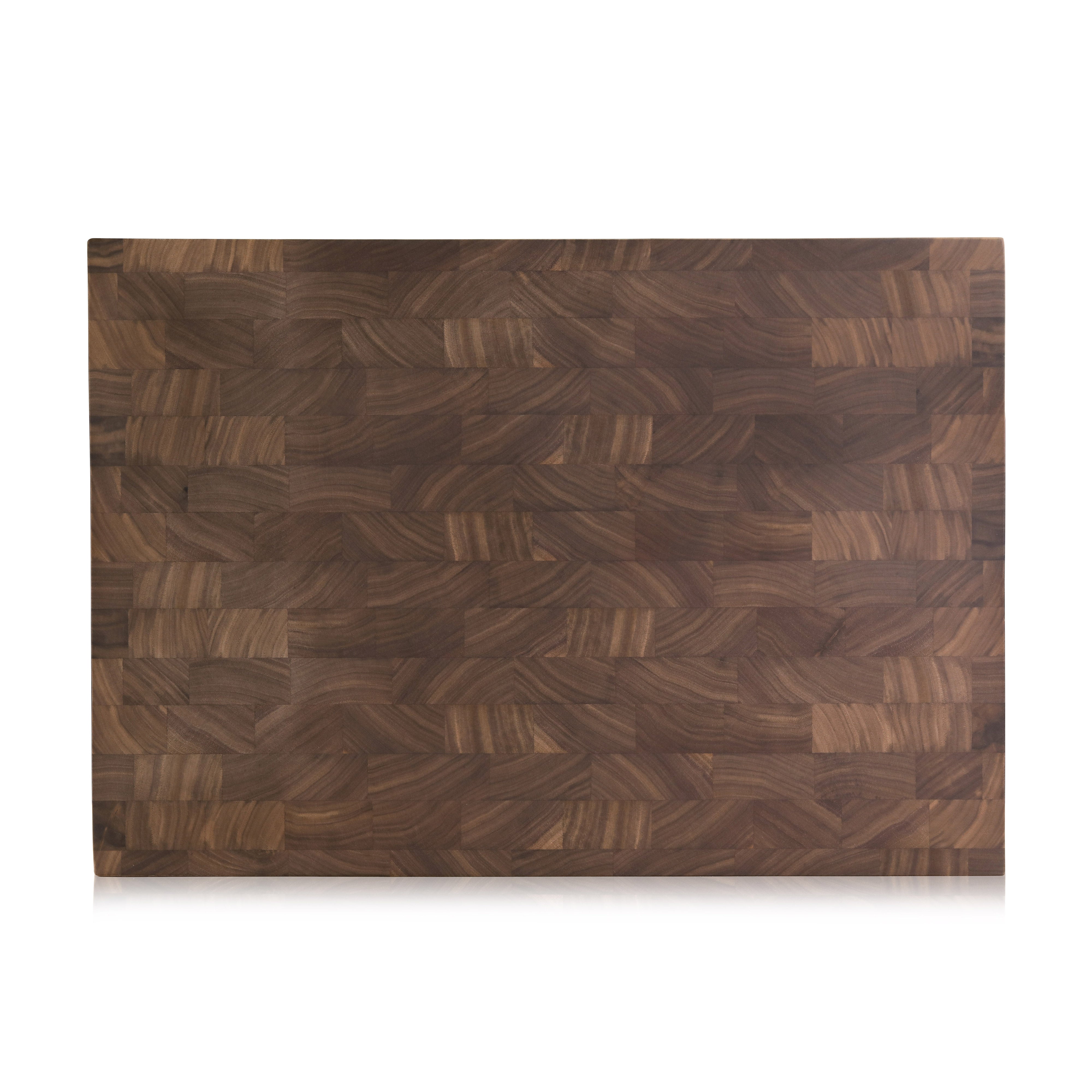
TKSC Walnut End-Grain Cutting Board
Thomas Keller Signature Collection. Made from premium solid black walnut with tightly packed, moisture-resistant end grain that's gentle on your knife edges.
- Dimensions14 x 20 x 1.5 in
- WoodSolid black walnut
- GrainEnd grain
- FinishFood-safe mineral oil and beeswax
- DesignReversible with carved hand grips
- CareHand wash only
- Model1024104
$299.95
Shop nowKeep two boards and protect your edge
The best material for a cutting board depends on the job. Wood, especially end-grain walnut or maple, is the best choice for everyday prep because it's gentle on your knives and lasts for decades with simple care. Plastic is the practical partner for raw meat thanks to easy dishwasher cleaning. Keep one of each, oil your wooden board once a month, and replace plastic when it's deeply scored. Your food stays safe and your knives stay sharp.


